
Myga Yoga Starter Set – Yoga Mat, 2 Yoga Blocks & Strap with Metal D-Ring – Non-Slip Yoga & Pila
£19.99
View on Amazon →
Published 17 September 2026 · updated 2026-09-17 · by GymStoreOnline
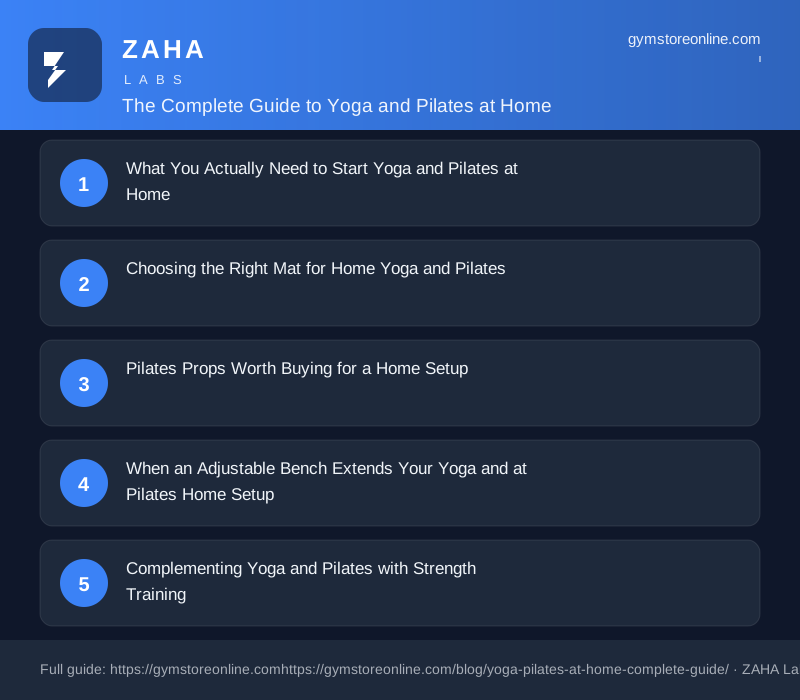
Yoga studios charge £10–£20 per class, and reformer pilates can cost considerably more. Setting up for yoga and pilates at home costs less than one month of studio membership — a 6×4 ft floor area, a quality mat, and two or three props is all you need to follow any beginner programme from day one.
Progress further, and a foldable adjustable bench adds dozens of pilates-style strength moves without claiming permanent floor space. This guide covers everything a UK buyer needs: mat specs, prop priorities, and when dedicated home-gym kit starts to earn its place.
The minimum viable kit is more compact than most people expect. You need a mat, two yoga blocks, a resistance band or strap, and enough clear floor space for your body length plus arm extension in every direction. That is a minimum of 6 ft × 4 ft — ideally 8 ft × 6 ft for full pilates roll sequences.
Use these basics for four to six weeks before buying anything else. You will know exactly what is missing before spending further.
The mat is the single most impactful purchase in any yoga and pilates at home setup. Thickness, material and grip vary significantly between products, and a poor choice means discomfort every session.
Standard yoga mats run 3–4mm. That is adequate for standing and balance poses but too thin for pilates spinal rolling, seated forward bends and sustained floor sequences — your spine and sit bones will register every hard surface beneath. For combined yoga and pilates use, 5–6mm is the practical minimum. Travel mats (1–2mm) are not suitable for home pilates work.
Natural rubber offers the best grip and durability — it is heavier (typically 2–3 kg), which matters less at home than when commuting to a studio. Avoid it if you have a latex allergy. TPE (thermoplastic elastomer) is lighter, closed-cell so it wipes clean easily, and sits at a mid-price point with reliable grip. PVC is the cheapest and most common option: durable, but harder to clean thoroughly and grip degrades noticeably when damp.
Standard mats are 68 in (173 cm) long. If you are taller than 5 ft 10 in, look for 72–74 in options. Width matters too — 24 in is standard, but 26–28 in gives noticeably more room for pilates arm circles and wide-stance yoga poses.
Wipe your mat with a damp cloth after each session and air-dry it before rolling. Most mats lose grip from sweat build-up, not wear. A monthly rinse in cool water — no heat, no detergent — restores surface tack and extends lifespan meaningfully.
Pilates uses more small equipment than yoga at the intermediate level. Here is what genuinely adds value, in rough order of priority:
| Prop | Primary use | Approximate UK price |
|---|---|---|
| Yoga blocks × 2 | Supported poses, balance challenges | £8–£15 per pair |
| Resistance band set | Leg work, stretching, core activation | £10–£20 |
| Pilates ring (magic circle) | Inner-thigh and core resistance | £10–£18 |
| Foam roller (90 cm) | Spinal extension, myofascial release | £12–£25 |
| Stability ball (55–65 cm) | Core instability work, pilates hundreds | £15–£25 |
You do not need all of these at once. Blocks and a resistance band set cover most beginner and intermediate video programmes. Add a foam roller once you are practising three or more times a week.
Mat-based pilates has natural limits. You cannot meaningfully load a single-leg press, add controlled resistance to a tricep extension, or perform true decline ab work without a raised surface. A foldable adjustable bench bridges that gap without claiming permanent floor space.
The pilates-compatible moves a bench enables: decline crunches, reverse crunches, incline and decline push-ups, tricep dips (standard in pilates fusion and barre classes), single-leg step-ups for hip stability, and supported back extensions that replicate reformer long-box work.
Angle positions. More positions mean finer control over incline and decline. The Weight Bench Foldable — with its 300 kg capacity, 74.5 cm wide seat and 67 training angles — provides enough positional range for pilates work from beginner to advanced. The wider seat offers a more stable base for balance-heavy exercises than the narrower platforms on many entry-level benches.
Certification and assembly. The YOLEO Adjustable Weight Bench is ASTM-certified at 300–375 KG, arrives 98% pre-assembled and offers 84–90 angle positions covering incline, decline and flat configurations. At £69.99, it is one of the more versatile foldable benches at this price. The near-complete pre-assembly matters practically — you can fold it out and use it without any setup time between yoga and strength sessions.
Entry-level footprint. If you are not yet committed to regular strength work, the OZE SPORTS Adjustable Weight Bench at £39.99 is one of the most compact foldable options handling incline, decline and flat configurations — a practical starting point for pilates supplementation without significant outlay.
A freestanding squat rack is built for heavy barbell compound lifts, not for pilates supplementation. Start with an adjustable bench and add a rack only when barbell squats become a consistent part of your routine. The YOLEO 400–900 KG ASTM-Certified All-in-One set — which includes a bench press rack and leg extension/curl attachment at £99.99 — is genuinely useful at that stage, but it is overkill as a first purchase alongside yoga and pilates.
A growing number of movement coaches advocate pairing mat work with resistance training two or three times a week. Pilates builds control and stability, yoga builds mobility, but neither applies enough load to meaningfully support bone density or offset muscle loss over time.
A minimal pairing — three to four exercises, two sets each — takes under 25 minutes and requires only a bench and adjustable dumbbells or bands. No barbell needed at this stage. The SPORTNOW 420 KG Weight Bench with Adjustable Bench Press Rack and Dip Station (£83.59) suits those who want to progress to rack-supported movements later without buying separate equipment at each stage.
Every product on this page meets the following criteria:
Selection is based on UK availability and verified specifications. Products are not weighted by affiliate commission rates.
You want to follow online yoga or pilates classes without a studio subscription. You have a space that can clear 6×4 ft — a spare bedroom, garage corner or one end of a living room. You are prepared to spend £40–£80 on a mat and props, with the option to add a bench once you are practising consistently. You already do, or plan to start, some light resistance work alongside your practice.
You are a complete beginner who learns best with in-person correction — form errors in yoga and pilates become habits quickly and are harder to spot from video. If you specifically want reformer pilates, mat alternatives are genuinely not equivalent; reformer machines start at several hundred pounds and require the floor space of a single bed. And if home accountability is a real challenge for you, a paid class creates structure that equipment sitting in a corner cannot.
A few decisions separate a space you use consistently from one you walk past:
Temperature. Both practices benefit from a warm room (18–22 °C). A cold spare room is harder to warm up in — literally and mentally. A small tower heater on a 30-minute timer solves this cheaply.
Flooring. Carpet grips mats well but creates friction during pilates sliding exercises. Hard floors — wood, tile, laminate — give better mat performance. Check that your mat has sufficient grip to stay put without a separate non-slip underlay beneath it.
Storage. Blocks, bands, a foam roller and a folded bench all need a designated home. A wall-mounted hook set or narrow shelving unit keeps the floor clear and practice-ready. Most foldable benches stand upright against a wall between sessions — the SPORTNOW's heavy-duty frame does this stably once folded.
Screen position. Most practitioners follow video classes at home. A tablet stand or small shelf at seated eye level eliminates the head-craning that comes from a screen placed on the floor. It is a £10–£15 fix that measurably improves any 45-minute session.


For combined yoga and pilates use, 5–6mm is the practical minimum. Standard yoga mats at 3–4mm are fine for standing poses but too thin for pilates spinal rolling, seated sequences and floor work that puts sustained pressure on the spine or sit bones. If you already own a 4mm mat, layer a folded blanket underneath for pilates floor sessions until you replace it with a thicker option.
No. Mat pilates covers the vast majority of pilates exercises without a reformer. A reformer adds spring-loaded resistance and a moving carriage that changes the challenge profile, but it costs several hundred pounds and requires the floor space of a single bed. A mat, resistance band set, foam roller and stability ball recreate most of the resistance and instability work at a fraction of the cost — more than enough for beginner to intermediate programmes.
It is worth it once you want to add pilates-style strength work — decline crunches, tricep dips, incline push-ups and step-ups all require a raised surface that a mat alone cannot provide. A foldable adjustable bench stores flat against a wall and starts at around £40. It earns its place once you are practising three or more times a week and mat work alone no longer challenges you sufficiently.
The functional minimum is 6 ft × 4 ft of clear floor space — enough for your mat plus a small buffer in every direction. For full pilates rolling sequences, wide-stance poses and exercises that extend your arms horizontally, 8 ft × 6 ft is more comfortable. A foldable bench adds roughly 50–60 cm to your required depth when in use, but stands upright against a wall when not needed.
As an Amazon Associate we earn from qualifying purchases. Prices and availability are accurate as of the date shown and are subject to change — the price on Amazon at checkout is the one that applies.
Find the best adjustable bench for ab and core workouts at home. UK guide covering angles, load ratings and picks under £100 for e
Everything you need to choose the best adjustable dumbbells for home workouts: weight range, locking mechanisms, build quality and
Build your home barbell and weight plate setup right: what to look for in bars, plates, squat racks and benches. Real specs, UK pr